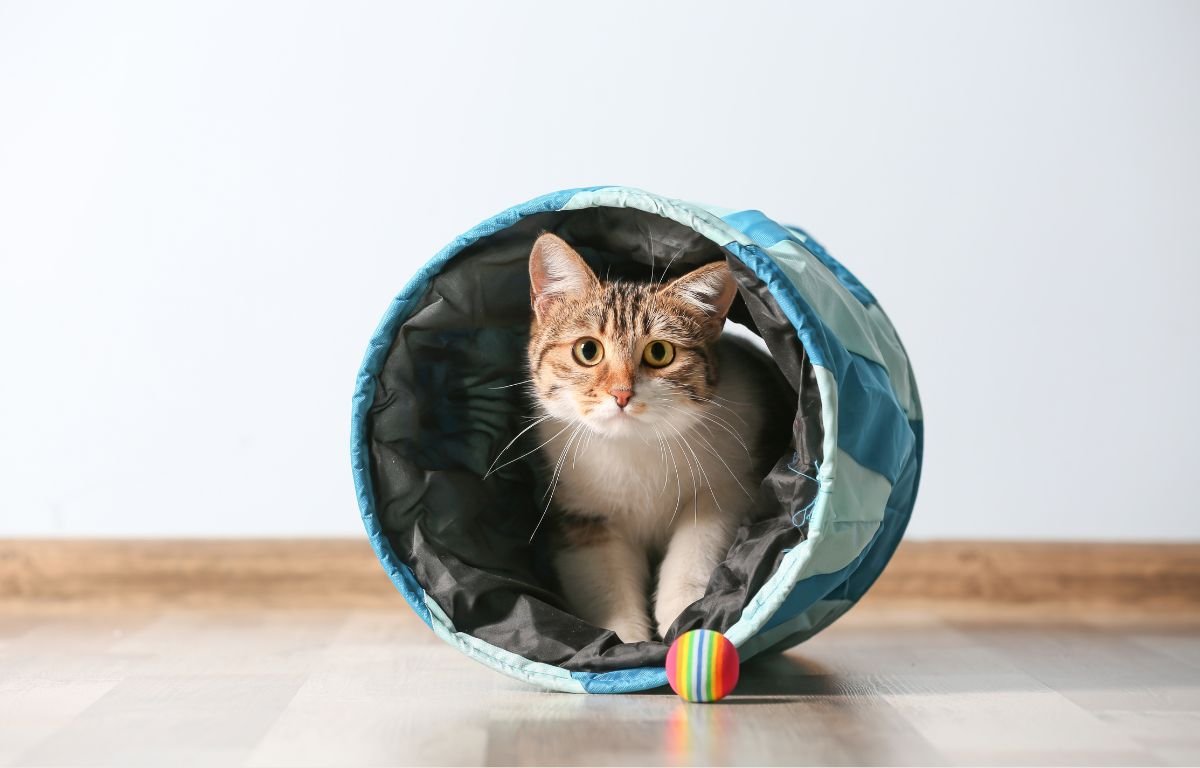
How Much Playtime Does a Cat Need?
How Much Playtime Does a Cat Need? is one of the most common questions cat parents ask—and for good reason. Your cat’s daily playtime needs directly affect their health, behavior, mood, weight, and even the quality of sleep you both get. With indoor cats living longer lives and spending more time lounging on sunny windowsills, understanding the right amount of stimulation is essential for preventing boredom and unwanted behaviors.
Play isn’t just fun. It’s instinct. And when your cat doesn’t get enough of it, their inner tiny tiger looks for creative (and sometimes chaotic) outlets.
Let’s break down exactly how much playtime your cat needs, why it matters, and how to tailor the perfect routine for your feline friend.
Quick Response: How Much Playtime Does a Cat Need?
- Most adult cats need 20–40 minutes of active play per day, split into short sessions.
- Kittens usually require at least 60–90 minutes spread throughout the day.
- Senior cats need less intensity but still benefit from gentle daily play to keep joints and minds healthy.
- Cats with behavior issues (night zoomies, aggression, or attention-seeking) often need more structured playtime.
- The best play routines mimic hunting cycles: stalk → chase → pounce → catch → reward.
Why Playtime Matters More Than You Think
If you ever wondered why your cat suddenly sprints across the room at 2 a.m., pounces on your ankle, or knocks pens off the table like a tiny furry villain, the answer is simple:
Your cat has unspent energy and unfulfilled hunting instincts.
Cats are natural predators designed to stalk, chase, and pounce multiple times a day. Indoor life—while safe and cozy—removes those opportunities. Without structured play:
- Weight gain happens
- Anxiety increases
- Aggression toward people or pets can develop
- Destructive behaviors (scratching furniture, chewing plants) escalate
- Sleep cycles shift, leading to nighttime chaos
One vet behaviorist famously explained that play is medicine for cats. It regulates their mood, prevents stress, and gives them confidence.
And the good news? You don’t need fancy equipment or hours of time. You just need consistency and the right approach.
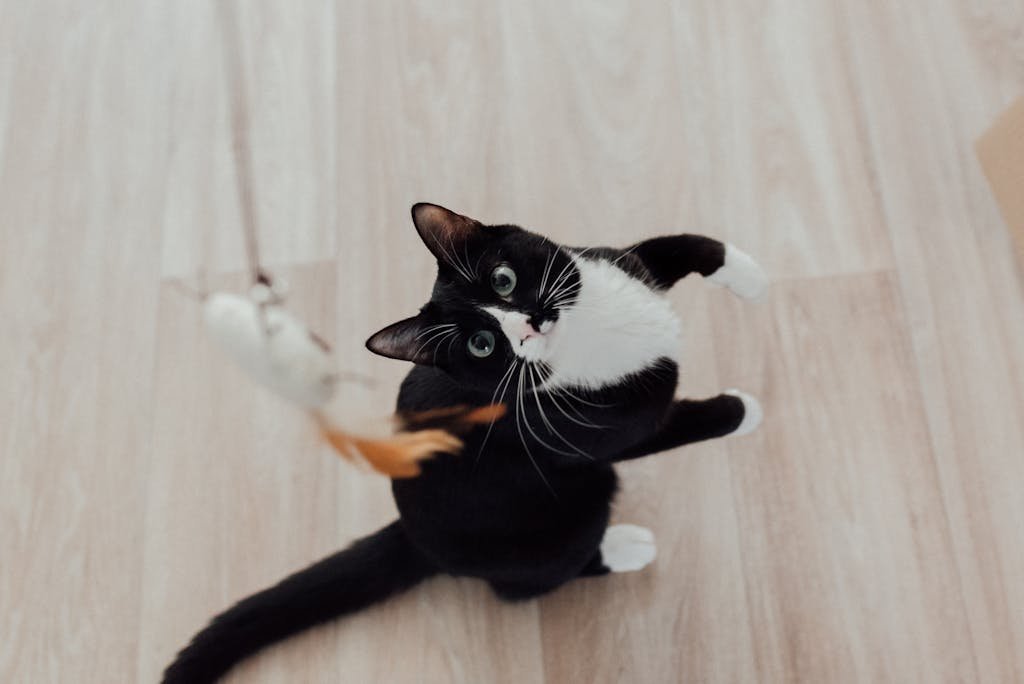
Signs Your Cat Needs More Playtime
Some cats demand it loudly (hi, vocal Siamese parents 👋). Others are subtle. Here are the most common signs:
1. Nighttime Zoomies
Your cat is basically saying: “I have energy left. Let’s party.”
2. Sudden Biting or Aggression
Unspent energy often comes out sideways.
3. Excessive Meowing
Cats beg for stimulation just like dogs beg for treats.
4. Destructive Behavior
Knocking things off shelves isn’t spite—it’s boredom mixed with curiosity.
5. Weight Gain
Lack of exercise is a major contributor to feline obesity.
6. Over-Grooming
A bored mind can turn into anxious habits.
If your cat checks two or more of these boxes, it’s time to increase daily play.
How Much Playtime Does a Cat Need? (Detailed Breakdown)
We’ll look at kittens, adults, and seniors, because each age group needs something different.
Kittens: 60–90 Minutes Daily
Kittens are little chaotic goblins with endless energy. Their brains and bodies are developing rapidly, which means they need:
- Frequent stimulation
- Short, high-energy play sessions
- Opportunities to practice hunting skills
Recommended schedule:
10–15 minutes, 4–6 times per day.
Examples of great kitten play:
- Feather wand chases
- Soft balls that can be batted around
- Tunnel sprints
- Anything that moves unpredictably (even a crumpled paper ball)
Real-life example:
Emily, a first-time kitten parent, noticed her 4-month-old kept climbing her curtains every evening. After adding two structured wand-toy play sessions before bedtime, the curtain attacks magically… stopped.
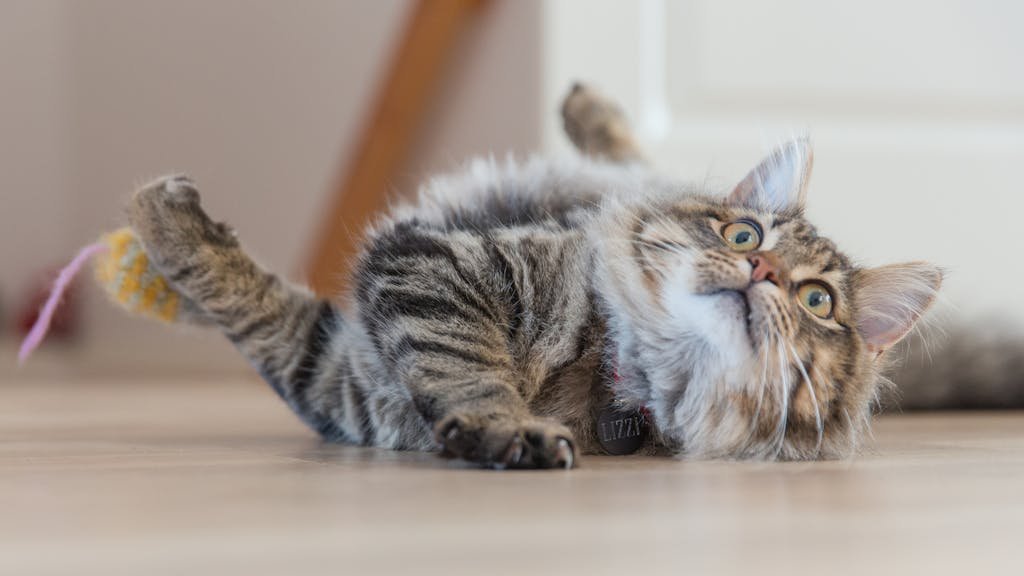
Adult Cats: 20–40 Minutes Daily
Most adult cats thrive with two play sessions per day, each 10–20 minutes.
This is the sweet spot where:
- Weight stays healthy
- Stress stays low
- Behavior remains balanced
- Bonds deepen
Some breeds (Bengals, Abyssinians, Sphynx) may need up to 60 minutes daily due to higher activity levels.
Real-life example:
Mark’s adult tabby, Luna, used to zoom around at 3 a.m. After adding a 15-minute evening wand session plus 5 minutes of food-puzzle play, Luna now sleeps through the night. Mark calls it “the cheapest miracle of my life.”
Senior Cats: 10–20 Minutes Daily (Low Intensity)
Older cats slow down, but they still want to play—they just need gentler options.
Benefits for seniors:
- Keeps joints mobile
- Helps prevent cognitive decline
- Offers emotional enrichment
- Reduces stiffness from arthritis
Use slow-moving toys, scent-based games, or food puzzles.
How to Create the Perfect Play Routine
To answer how much playtime does a cat need correctly, we must consider individual personality.
Here’s how to tailor routines:
1. Match Play to Your Cat’s Hunting Style
Cats usually fall into one (or a mix) of these categories:
- Stalkers: love slow, creeping movement (think of a toy “hiding” behind a pillow).
- Chasers: prefer fast action, like a darting laser or wand.
- Pouncers: enjoy high jumps and surprise attacks.
- Swatters: love toys dangling in place for repeated batting.
2. Keep Sessions Short and Natural
Cats hunt in bursts—not marathons.
Aim for multiple mini-sessions, not one long workout.
3. End With a “Catch Moment” + Treat
This completes the natural hunt cycle:
Stalk → Chase → Pounce → Catch → Eat → Groom → Sleep
Skipping this step often leads to frustration.
4. Rotate Toys Weekly
Cats get bored quickly. Hide toys and bring them back later—they’ll feel new again.
Rotating toys also prevents overstimulation and keeps your cat excited about playtime.
5. Use Food Puzzles and Slow Feeders
This is especially helpful for busy owners.
Food puzzles provide:
- Mental stimulation
- Slow feeding
- A healthy challenge
- Built-in “play” throughout the day
Best Playtime Products for Every Cat Personality
(Examples, descriptions, and benefits — without overselling language)
1. Interactive Wand Toys
Best for chasers, hunters, energetic cats.
Mimics “bird” or “mouse” movement for a complete hunting cycle.
2. Motion-Activated Toys
Perfect for busy owners or cats who prefer solo play.
3. Catnip or Silvervine Toys
Great for stimulating interest in less playful cats.
4. Puzzle Feeders
Provides both mental and physical enrichment.
Also recommended for weight management.
5. Rolling or Track Toys
Ideal for cats who like independent play and swatting behaviors.
Why Your Cat Isn’t Playing — And How to Fix It
Not all cats jump into play right away. Here’s what might be going on.
1. Your Cat Is Bored of Their Toys
Solution: Rotate toys weekly. Add new textures, scents, and motion patterns.
2. Your Cat Doesn’t Know How to Play (Common in rescues)
Solution: Use slow, predictable movements. Start with toys that mimic insects or small prey.
3. Your Cat Has a Different Daily Rhythm
Solution: Play during natural “hunting hours”—early morning and evening.
4. Your Cat Is Overweight or Low-Energy
Solution:
- Begin with gentle wand movements
- Encourage very short sessions
- Gradually increase activity
- Use high-value rewards
5. Multi-Cat Household Stress
Solution:
- Provide separate toys
- Allow one-on-one sessions
- Avoid competitive play
- Ensure each cat has escape zones
6. Medical or Mobility Issues
Solution:
If your cat shows pain, limping, or hesitates to jump, choose low-impact games such as scent play or puzzles. Consult your vet for joint support options.
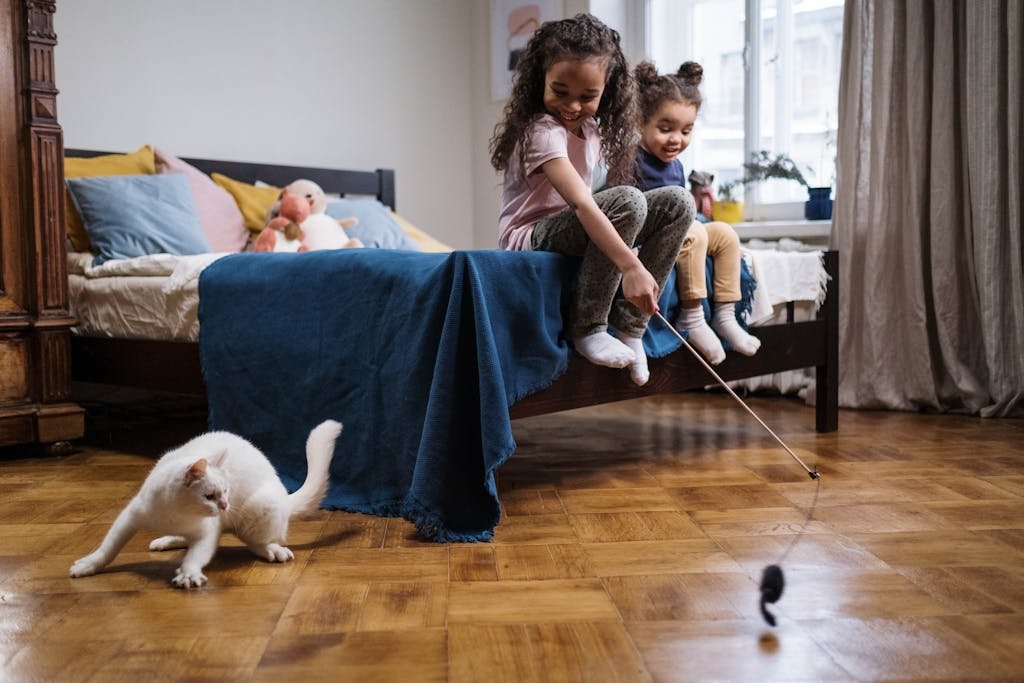
Buyer’s Guide: What to Look for in Cat Playtime Products
Choosing toys isn’t just about “what looks cute.” Look for:
1. Safe Materials
Avoid small detachable parts your cat could swallow.
2. Durability
Cats are surprisingly strong hunters—cheap toys break fast.
3. Movement Pattern
The best toys mimic real prey behavior.
4. Multi-Sensory Engagement
Textures, sounds, feathers, and scent options keep cats interested.
5. Solo vs. Human-Interactive Options
A balanced toy collection supports both types.
6. Your Cat’s Age and Mobility
Kittens need fast action; seniors need gentle stimulation.
Cats that stay indoors full-time especially benefit from interactive toys designed to mimic prey, which helps owners choose options that match their cat’s natural play style.
Frequently Asked Questions About Cat Playtime
How Much Playtime Does a Cat Need Each Day?
Most adult cats need 20–40 minutes daily, kittens need 60–90, and seniors need gentle daily stimulation.
What Happens If My Cat Doesn’t Get Enough Play?
Boredom can cause weight gain, nighttime hyperactivity, aggression, destructive chewing, and excessive meowing.
Can I Play With My Cat Too Much?
It’s rare, but overstimulation can occur. If your cat suddenly bites or walks away, the session is over.
Do Indoor Cats Need More Playtime Than Outdoor Cats?
Usually, yes—indoor cats rely fully on humans for enrichment.
Is Laser Pointer Play Safe?
Yes, as long as you end with a physical toy so your cat actually “catches” something.
When Is the Best Time to Play With My Cat?
Early morning and evening, following their natural hunting instincts.
My Cat Doesn’t Like Toys. What Should I Do?
Try slow-moving toys, scent-based enrichment, or food puzzles. Some cats prefer thinking games over chasing games.
Creating a Happier, More Balanced Cat Through Play
Understanding how much playtime a Cat needs transforms the relationship between you and your cat. Whether you have a wild kitten, a zoomy adult, or a gentle senior, the right amount of daily interaction improves their health, reduces stress, prevents unwanted behavior, and deepens your bond.
Every cat has a unique play personality—your job is simply to discover it.
Explore more expert tips and product recommendations at BestCatStuff.com — because your cat deserves the best.